DNA analysis of saliva may predict treatment response and relapse in oral cancer patients: Study
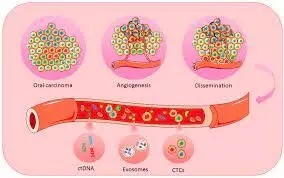
DNA analysis of saliva may predict treatment response and relapse in oral cancer patients suggests a new study published in the Oral Oncology.
The incidence of head and neck squamous cell carcinoma (HNSCC) continues to increase and although advances have been made in treatment, it still has a poor overall survival with local relapse being common. Conventional imaging methods are not efficient at detecting recurrence at an early stage when still potentially curable. The aim of this study was to test the feasibility of using saliva to detect the presence of oral squamous cell carcinoma (OSCC) and to provide additional evidence for the potential of this approach. Fresh tumor, whole blood and saliva were collected from patients with OSCC before treatment. Whole exome sequencing (WES) or gene panel sequencing of tumor DNA was performed to identify somatic mutations in tumors and to select genes for performing gene panel sequencing on saliva samples. Results: The most commonly mutated genes identified in primary tumors by DNA sequencing were TP53 and FAT1. Gene panel sequencing of paired saliva samples detected tumor derived mutations in 9 of 11 (82%) patients. The mean variant allele frequency for the mutations detected in saliva was 0.025 (range 0.004 – 0.061). Somatic tumor mutations can be detected in saliva with high frequency in OSCC irrespective of site or stage of disease using a limited panel of genes. This work provides additional evidence for the suitability of using saliva as liquid biopsy in OSCC and has the potential to improve early detection of recurrence in OSCC. Trials are currently underway comparing this approach to standard imaging techniques.
Reference:
Ahmed A. Ahmed, Mateja Sborchia, Hannah Bye, Maria Roman-Escorza, Ariella Amar, Rhonda Henley-Smith, Edward Odell, Mark McGurk, Michael Simpson, Tony Ng, Elinor J. Sawyer, Christopher G. Mathew. Mutation detection in saliva from oral cancer patients,
Oral Oncology, Volume 151, 2024, 106717, ISSN 1368-8375,
https://ift.tt/Y1IqFLb.
(https://ift.tt/CwebE4k)
Keywords:
DNA analysis, saliva, predict, treatment response, relapse, oral cancer patient, study, Oral Oncology, Head and neck squamous cell carcinoma HNSCC; Oral squamous cell carcinoma OSCC; Saliva; Cell-free DNA; Circulating tumor DNA; Early detection
from Medical News, Health News Latest, Medical News Today - Medical Dialogues | https://ift.tt/kLpOA0B


Comments
Post a Comment